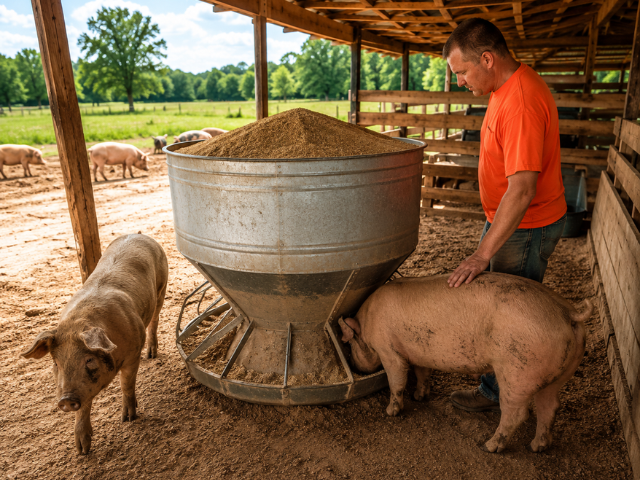
Benefits of Livestock Risk Protection for Swine Producers
Livestock Risk Protection offers several advantages that make it attractive to Texas swine producers looking for practical ways to manage financial risk.
Federally Subsidized Premiums
The USDA subsidizes a portion of the insurance premium, making Livestock Risk Protection more affordable for eligible producers.
No Brokerage Account Required
Unlike futures contracts, producers do not need to establish a brokerage account to participate in the program.
No Margin Calls
Market fluctuations do not create margin calls or require additional capital during the insurance period.
Flexible Marketing
Producers continue marketing hogs according to the needs of their operation rather than following the requirements of a futures contract.
Coverage Throughout the Year
Coverage endorsements are available year-round, allowing producers to match insurance with their anticipated marketing schedule.
Greater Financial Confidence
Perhaps the greatest benefit is confidence. While no one can predict future market prices, Livestock Risk Protection helps reduce financial uncertainty by establishing a level of protection before animals reach market.
Built for Texas Swine Operations
No two swine operations are exactly alike. Some producers market hogs continuously throughout the year, while others operate on scheduled production cycles. Feed costs, facility capacity, labor availability, and market demand all influence production decisions.
Livestock Risk Protection recognizes these differences by allowing producers to choose endorsement periods that closely match their expected marketing dates. Instead of forcing every operation into the same schedule, the program offers flexibility that works with individual production plans.
For Texas swine producers, this flexibility provides an opportunity to manage market risk without changing the way they normally operate their business. By combining sound production practices with price protection, producers can focus on raising healthy livestock while preparing for uncertain market conditions.
Who Should Consider Livestock Risk Protection for Swine?
Livestock Risk Protection for Swine is designed for producers who want greater confidence when planning future hog sales. Every swine operation is different, but all producers share one common goal, protecting the value of their investment while remaining flexible enough to respond to changing market conditions. Whether you raise a few hundred hogs or manage a large commercial operation, LRP can become an important part of your overall risk management strategy.
Family Swine Farms
Family-owned swine farms make significant investments in feed, housing, labor, and animal health throughout the production cycle. A sudden drop in market prices can reduce profitability even when producers have done everything right. Livestock Risk Protection helps provide a level of financial security while allowing producers to continue operating according to their normal production schedule.
Commercial Swine Producers
Large commercial producers often market hogs throughout the year. Because market prices can fluctuate during each production cycle, protecting expected market value becomes an important part of financial planning. LRP allows commercial operations to establish price protection while maintaining the flexibility needed to meet production goals.
Diversified Livestock Operations
Many Texas ranches raise more than one type of livestock. Operations that include cattle, swine, sheep, goats, or other agricultural enterprises often use Livestock Risk Protection as one part of a broader business strategy. Protecting swine prices helps reduce overall financial risk while supporting long-term business stability.
Beginning Producers
New livestock producers often have less financial flexibility when markets decline unexpectedly. Livestock Risk Protection provides an opportunity to establish price protection while building experience and confidence in the livestock industry.
Livestock Risk Protection vs. Futures Contracts
Many livestock producers have heard about using futures contracts to manage market prices. While futures and options remain valuable marketing tools for some operations, they may not fit every producer.
Livestock Risk Protection offers a simpler approach to managing price risk.
Unlike futures contracts, LRP does not require a brokerage account. Producers also avoid daily margin calls that can require additional cash when market prices move unexpectedly.
Another important difference is flexibility.
With Livestock Risk Protection, producers continue marketing hogs according to their own production schedule. They are not required to deliver animals under the terms of a futures contract or actively monitor commodity markets every day.
Many Texas swine producers appreciate the ability to establish price protection without changing the way they normally operate their business.
Livestock Risk Protection vs. Livestock Mortality Insurance
Livestock Risk Protection and Livestock Mortality Insurance often work together, but they protect against very different risks.
Livestock Risk Protection focuses on market value.
Livestock Mortality Insurance focuses on protecting the financial investment in the animals themselves.
For example, suppose a producer insures a group of market hogs using Livestock Risk Protection.
If market prices decline before those hogs are sold, the producer may qualify for an indemnity payment if the ending value falls below the selected coverage price.
However, if hogs die because of a covered cause before reaching market weight, Livestock Risk Protection does not provide coverage for that loss.
That situation would fall under a Livestock Mortality Insurance policy.
Because the two policies protect different financial risks, many Texas producers choose both coverages as part of a complete livestock risk management strategy. One policy helps protect future market value, while the other helps protect the investment already made in the livestock.
Why Texas Producers Choose National Livestock Insurance
Choosing the right insurance agency is an important part of protecting your livestock operation. Every producer has unique goals, different production schedules, and different levels of financial risk. Working with an experienced livestock insurance specialist helps ensure that coverage fits the needs of the operation.
National Livestock Insurance has worked with livestock producers for years and understands the challenges that Texas ranchers and farmers face every day. Our team takes time to learn about your operation before discussing available coverage options.
Instead of offering one solution for every producer, we help build a personalized risk management strategy that supports your long-term business goals. Whether you operate a family farm, a commercial swine facility, or a diversified livestock operation, our goal is to provide dependable guidance and outstanding customer service.
We believe every producer deserves access to knowledgeable professionals who understand livestock insurance and can explain coverage in a clear and practical way.
Frequently Asked Questions
Is Livestock Risk Protection available throughout Texas?
Yes. Livestock Risk Protection for Swine is available in every county throughout Texas through approved livestock insurance agents.
What animals qualify for coverage?
Livestock Risk Protection for Swine applies to eligible market hogs that meet USDA program requirements and are expected to reach market weight during the selected insurance period.
Does Livestock Risk Protection insure against disease?
No. Livestock Risk Protection protects against declining market prices. It does not insure against disease, injury, illness, or death.
Can I still choose when to market my hogs?
Yes. One of the biggest advantages of LRP is the flexibility to market livestock according to your operation instead of following the requirements of a futures contract.
Are premiums federally subsidized?
Yes. Livestock Risk Protection is a federally subsidized insurance program administered through the USDA Risk Management Agency. The federal subsidy helps make coverage more affordable for eligible producers.
Do I need a brokerage account?
No. Livestock Risk Protection does not require a brokerage account or margin calls, making it a practical option for many Texas swine producers.
Can I purchase coverage more than once?
Yes. After submitting a one-time application, producers may purchase multiple coverage endorsements throughout the year that align with future marketing dates.
Why should I choose National Livestock Insurance?
National Livestock Insurance specializes in livestock insurance solutions and works with producers throughout Texas to explain coverage options and help build effective risk management strategies.
Request a Livestock Risk Protection Quote
Every swine operation has different goals, production schedules, and financial objectives. While no one can predict future market prices, producers can take proactive steps to reduce financial uncertainty before hogs are marketed.
Livestock Risk Protection for Swine provides a flexible way to help protect market value while allowing producers to continue making marketing decisions that fit their operation. Combined with strong management practices, LRP can become an important part of a long-term business strategy.
If you would like to learn more about Livestock Risk Protection for Swine in Texas, contact National Livestock Insurance today. Our experienced team is ready to answer your questions, explain available coverage options, and provide a personalized quote based on your operation. We are committed to helping Texas swine producers make informed decisions and protect the future of their business.